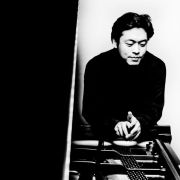
Sir Stephen Hough rounded off another terrific night at Wigmore Hall with a sparkling performance of his arrangement of three pieces from the Mary Poppins Suite, drawn by Robert and Richard Sherman from their legendary musical. They were, he hinted in his programme note, akin to the dish of chocolate truffles he loves to savour at the end of a meal. However, on this occasion he wasn’t dining, or evening picnicking, despite the long list of items. That list brought to mind one of those idiosyncratic panels created by art historian Aby Warburg (with the not inconsiderable assistance of Gertrude Bing) for his Bilderatlas Mnemosyne, which indulges his fascination with the persistence of particular iconographic representations over time. Hough’s performance of the pieces referenced his fascination with fragmentary forms and how they can be made to yield insights into the creativity of both composer and interpreter.


He opened with leaves extracted from two albums, Schubert’s Klavierstücke no. 2 in E flat, D946, and Brahms’s Intermezzo in E flat minor, Op.119 no.6 – and very finely caught the contrast of rich luminosity and brooding expression characteristic of both. The next three pieces moved from the studied compression of Schoenberg’s Six Little Piano Pieces, Op.19, (c. 5 minutes) to the abstract miniaturisation of Stockhausen’s Klavierstück III, (c. 30 seconds) to the wistful atomisation of Beethoven’s Bagatelle, Op.119 no.10 (c.15 seconds). Hough gave great weight to Schoenberg’s expressionist textures, evoking connections with the composer’s use of colour in his paintings; Stockhausen’s 55 notes were the sounds of static resulting from the composer twiddling the knobs of one of his twittering machines; and the image of Beethoven thumbing his nose at convention flickered like frames from a Lumière Brothers film clip.
From that flickering, the fabulous form of Beethoven’s Waldstein Sonata flew out from under Hough’s fingers with a force that consumed the fragments with evident relish. This was a richly-textured performance with no hint of primary colours, not even in C major. The abiding strangeness of the second movement can sometimes be heard as the early-onset of ‘Late Beethoven’ but Hough’s melancholic demeanour suggested that the mood of the composer when he jotted down those unsettling harmonies was no different on the day he sketched that whacky Bagatelle.


If the opening bars of the Waldstein give no clues for what will follow, the same cannot be said of Schumann’s Carnaval. It is arguable that such an outpouring of joy and rapture had never before been announced in so affecting a manner. The effortlessness of Hough’s magical incantation infused the constellation of miniatures which form the imaginative structure of this masterful work. Whether he was saluting Chopin with a rhetorical flourish or standing tall in the ranks of the League of David, the composer did so with the conviction, passion and clarity of vision; and so did Sir Stephen.